

Valeria Handal | Business Operations Manager • May 30, 2026

Author

Valeria Handal | Business Operations Manager

Date

May 30, 2026

Share

Most care systems were not designed around people. They were designed around appointments.

A session takes place. Notes are documented. A follow-up is scheduled. Then the system waits.


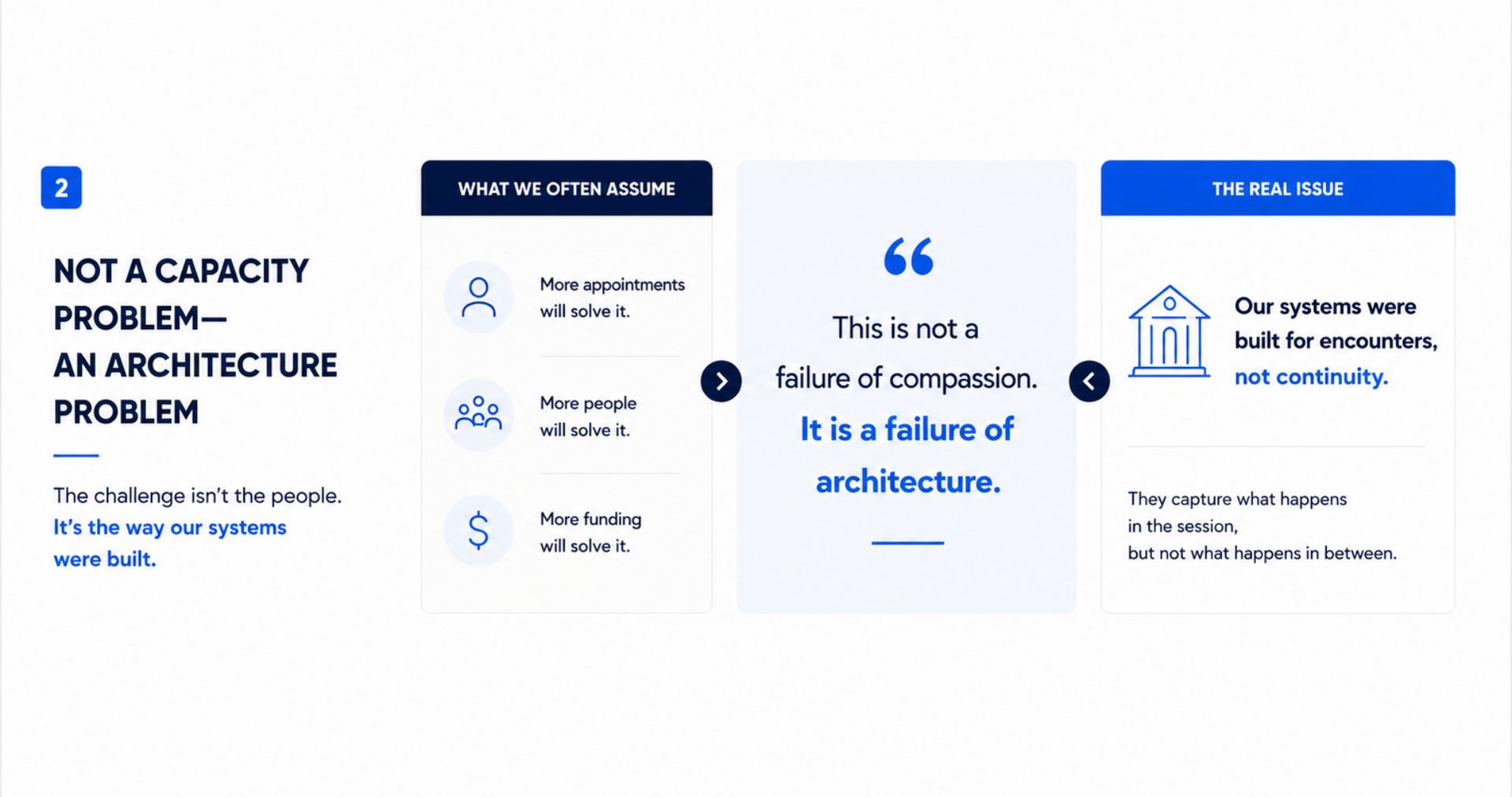
This is not a failure of compassion. It is a failure of architecture.

For many of the individuals these systems serve, the most consequential moments do not occur inside a session. They occur in the hours that follow — in the space between structure and solitude, between professional support and the ordinary pressures of life.


A survivor leaves a support group feeling grounded. Three days later, an unexpected trigger surfaces and there is no touchpoint, no bridge, no signal.


A student leaves counseling feeling cautiously hopeful. By Saturday, the anxiety has returned and there is no one to reach.


A client begins quietly withdrawing from services — not in a single dramatic moment, but incrementally, over weeks — long before any provider notices the pattern.


The appointment happened. The documentation was completed. And still, somewhere in the distance between sessions, something unraveled.

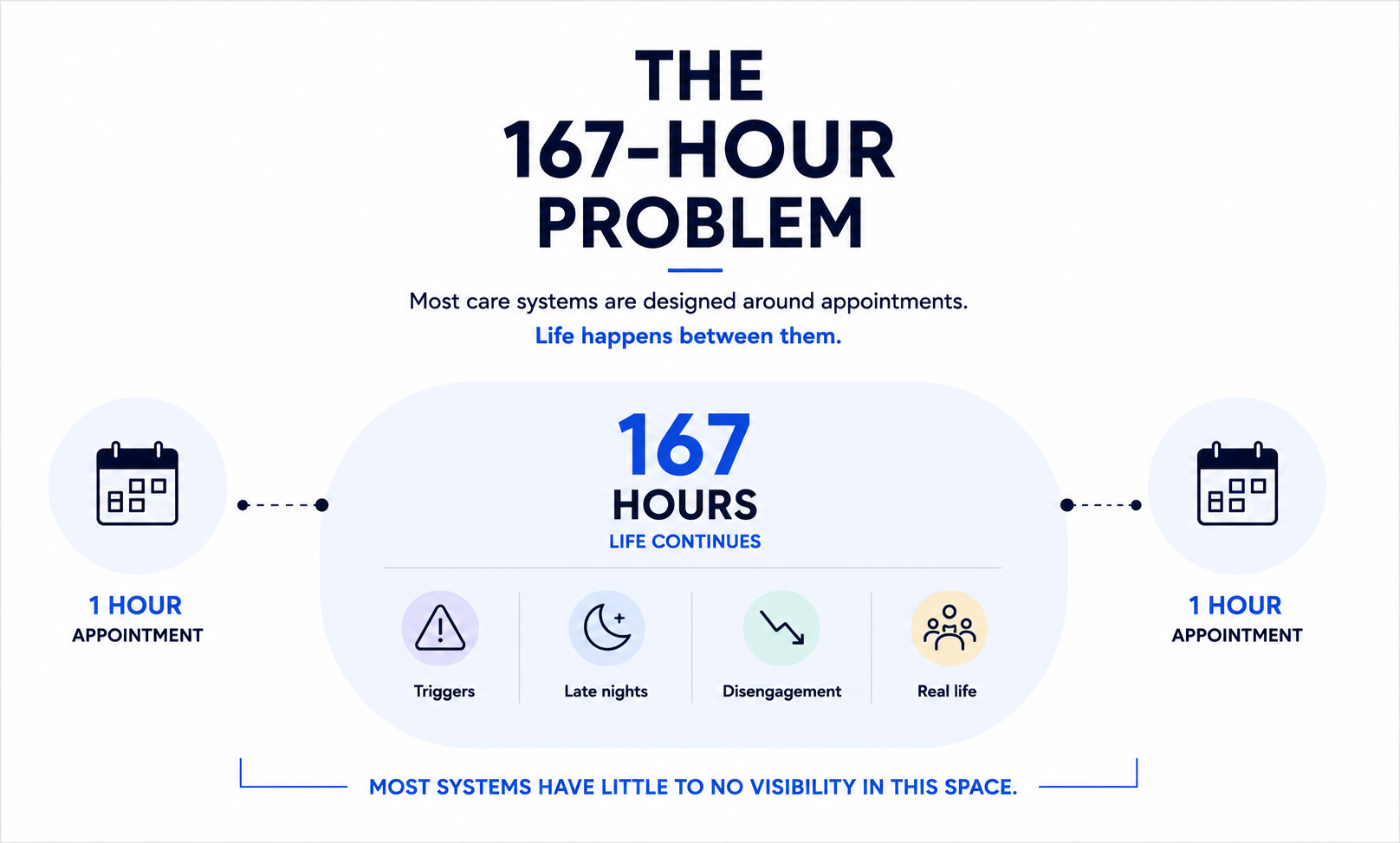
"If a client receives one hour of structured support each week, what happens during the other 167?"

This is not a rhetorical question. It is the central design flaw in how most human services organizations deliver care. We call it The 167-Hour Problem.

A structural problem, not a staffing one

The challenge is not the absence of skilled, committed professionals. The challenge is that the systems those professionals operate within were built for encounters — not for continuity. They were optimized to capture what happened in the session, not to sustain what was built during it.


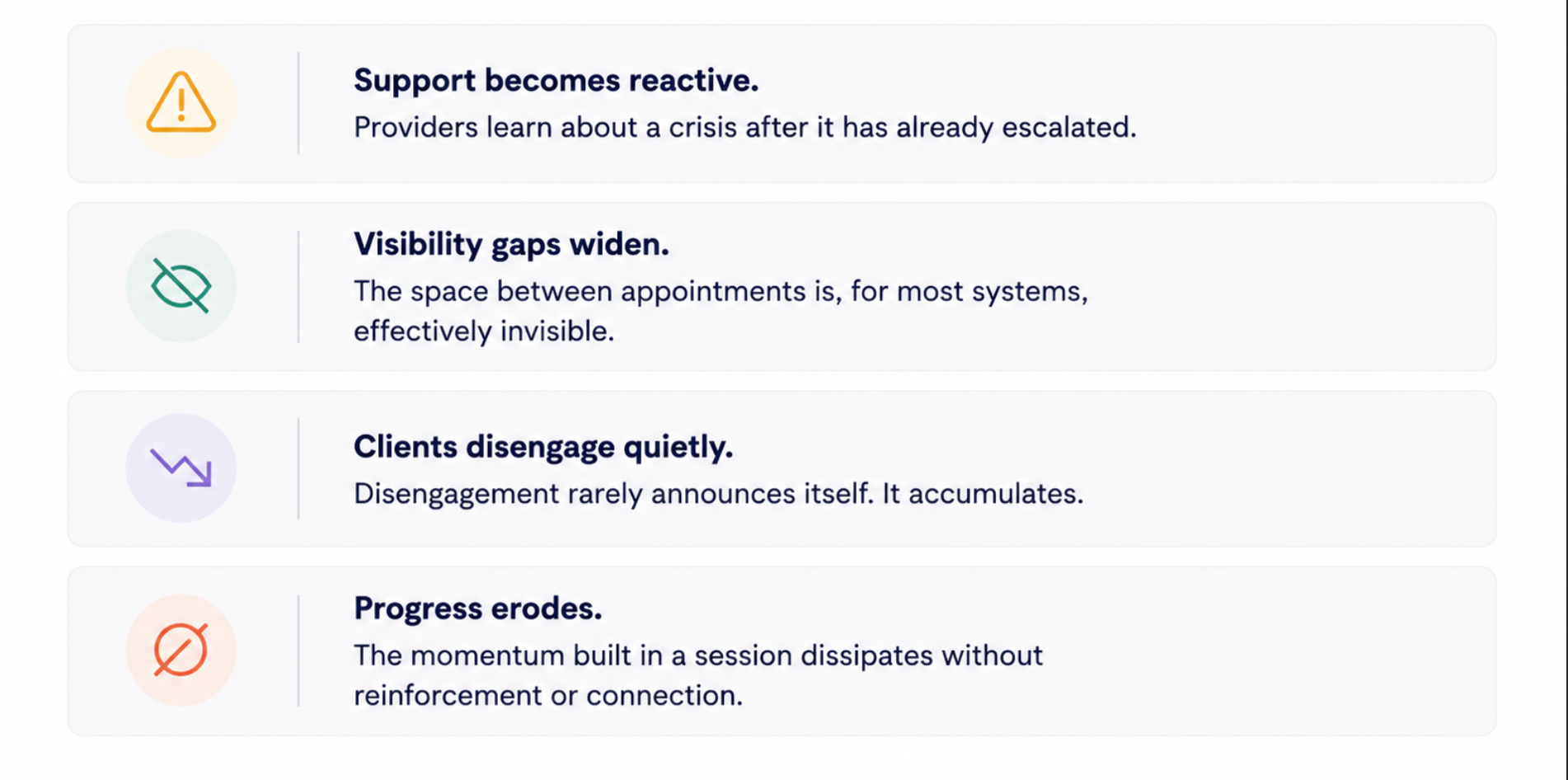
The consequences are predictable, and they compound:


The solution is not more appointments


Capacity cannot be scheduled into existence, and adding sessions does not solve a continuity problem, it only creates more isolated islands of support.


The solution is continuity of care as a design principle: the deliberate extension of support, connection, and visibility into the hours that appointments cannot reach.


"Continuity is not a supplement to scheduled care. It is the connective tissue that determines whether scheduled care holds."

Organizations that recognize this are beginning to ask different questions. Not: Did the client attend their session?  But: What happened after?


Not: Is the client on our caseload? But: Is the client truly, actively engaged between touchpoints?

The question that should be keeping leaders up at night

Appointments will always matter. The clinical encounter, the structured session, the scheduled intervention, these are not diminished by this framework. They are, if anything, made more meaningful when what happens around them is finally taken seriously.


But the question facing Executive Directors, Program Directors, and Case Management Leaders is not whether the 9 a.m. session was effective.


It is what happened at 11 p.m. on Thursday.


Because for many clients, those unstructured hours, the 167 that no system currently owns, are where recovery either deepens or quietly begins to reverse.


What Comes Next

Naming the problem is the first step. The second is understanding why existing infrastructure (documentation systems, case notes, scheduled check-ins) was not designed to solve it.


The 167-Hour Problem is not a gap in care. It is a gap in how care was conceived. And it requires a different kind of answer.


Visual representation of the Four Layers of Continuity framework.
By Valeria Handal | Business Operations Manager May 31, 2026
Explore the Four Layers of Continuity and learn how organizations can move from isolated appointments to proactive, visible, continuous care.

A bridge disappearing into fog, representing continuity of care and the unseen gap in appointments
By Valeria Handal | Business Operations Manager May 30, 2026
Most organizations mistake documentation for continuity of care. Explore the hidden gap between recording care and sustaining it.

Silhouette of a person alone against blurred city lights representing emotional struggle and isolati
By Valeria Handal May 26, 2026
Most emotional struggles happen between appointments. Explore why continuity of care matters beyond sessions.

A single puzzle piece resting on a wooden table in soft natural light, symbolizing the missing link
By Rosemary Mann May 22, 2026
Mental health support shouldn’t disappear between appointments. Discover how Coming Home is redefining continuity of care through real-time, trauma-informed support.

Two people standing on separate platforms using megaphones to communicate across a gap, representing
By Heather Baynes May 19, 2026
Explore the hidden gaps between moments of care and why continuity of support matters for real human outcomes. The Space Between Support examines emotional disengagement, provider burnout, and the need for systems that maintain connection between sessions.

By Valeria Handal | Business Operations Manager May 14, 2026
7 Indicators That Reveal Fragmented Care

By Valeria Handal | Business Operations Manager May 12, 2026
The moments where engagement is either sustained or quietly lost.

Coming Home cofounder Carlos Wallace pictured with his brother, whose loss shaped the vision behind
By Carlos Wallace | Co-Founder, Coming Home May 6, 2026
Coming Home cofounder Carlos Wallace reflects on grief, continuity of care, and what actually happens between sessions.
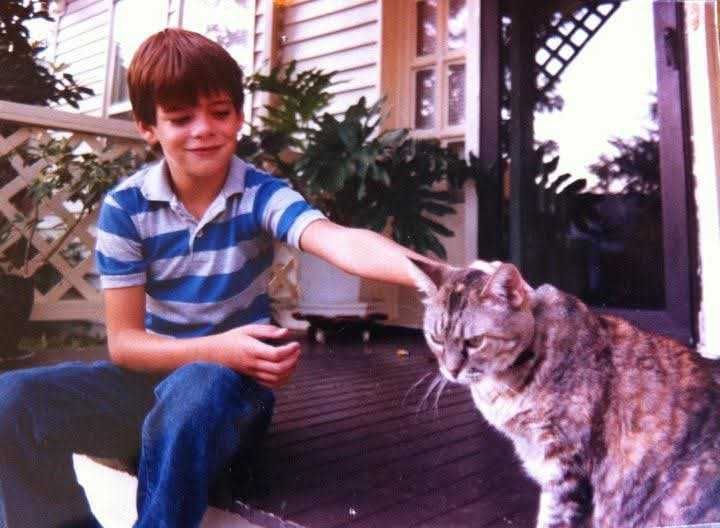
Childhood photo of Coming Home co-founder Chance Glasco sitting on a porch and petting a cat.
By Chance Glasco May 4, 2026
A personal story about growing up unseen by the system and how gaps in information and visibility impact care between moments that matter most, from Coming Home co-founder Chance Glasco.